Condensate Return Pumps, Tanks, Sizing & Recovery Solutions
Skidmore condensate return pumps collect hot condensate from steam systems and return it to the boiler feed circuit, reducing fuel use, makeup water demand, and thermal stress on the boiler.
Available in compact in-stock units, retrofit-friendly packages, and fully custom industrial configurations, Skidmore condensate return systems are built for commercial, institutional, and process steam applications.
Condensate Return Pumps
A steam condensate pump collects the hot water left behind after steam has released its energy and condensed back into liquid form. Instead of discharging that water as waste, the pump moves it from a receiver tank back to the boiler feed unit, where it re-enters the heating cycle.
This process keeps a steam system running efficiently. Condensate already carries significant heat energy and is free of the minerals found in fresh makeup water, so returning it reduces both fuel consumption and water treatment demand. A properly specified condensate return system also reduces the volume of cold makeup water entering the boiler, which lowers thermal stress on the heat exchanger and extends equipment life.
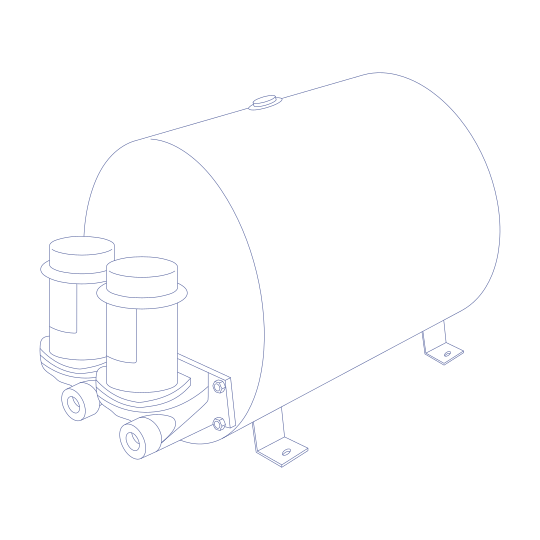
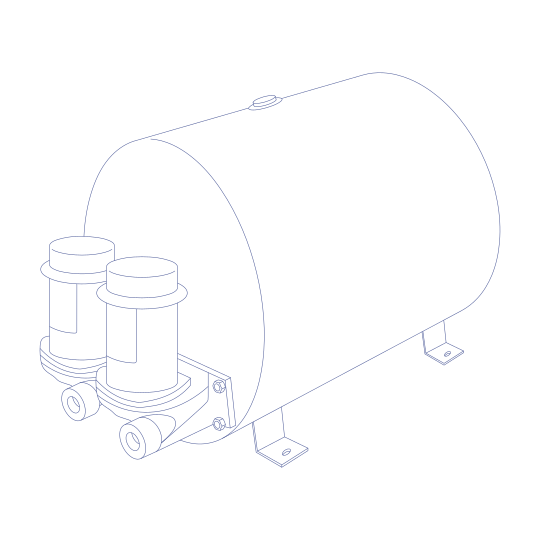
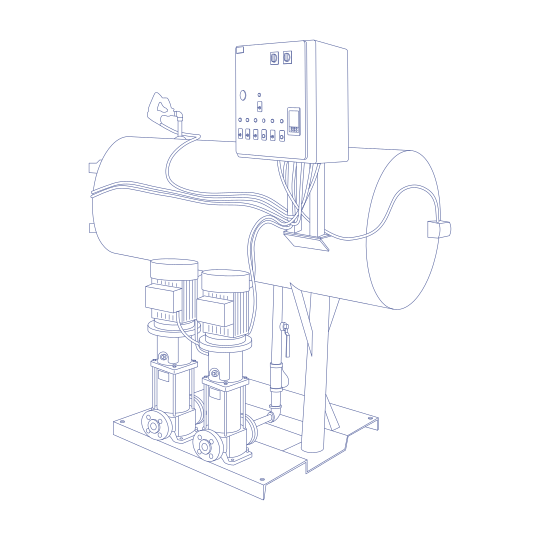
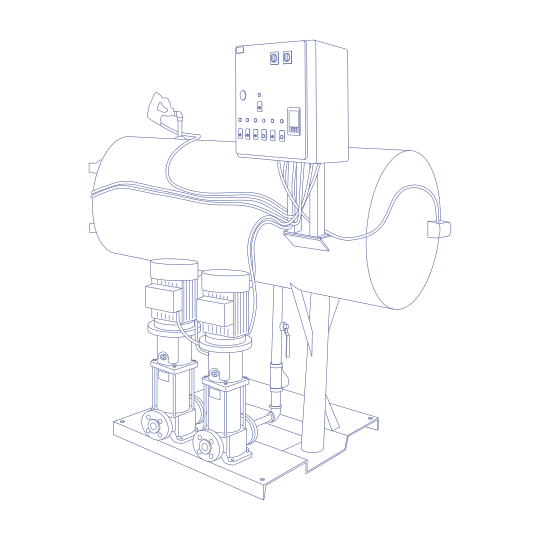
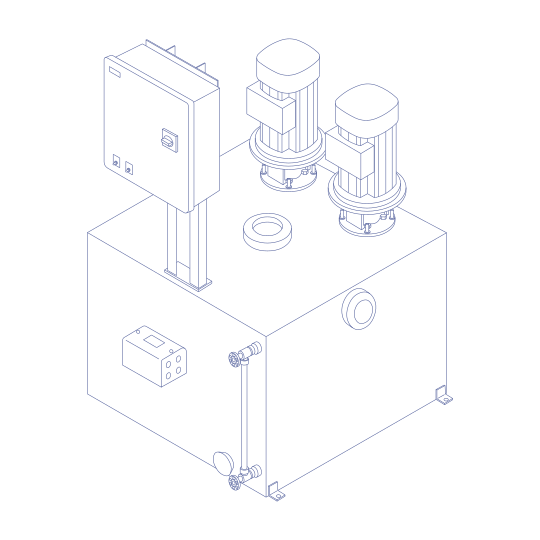
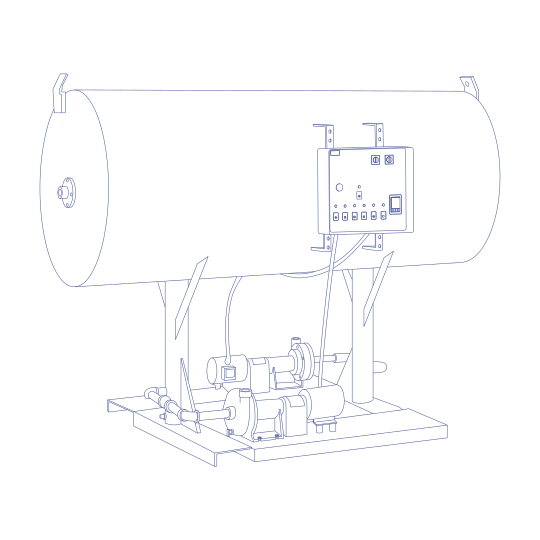
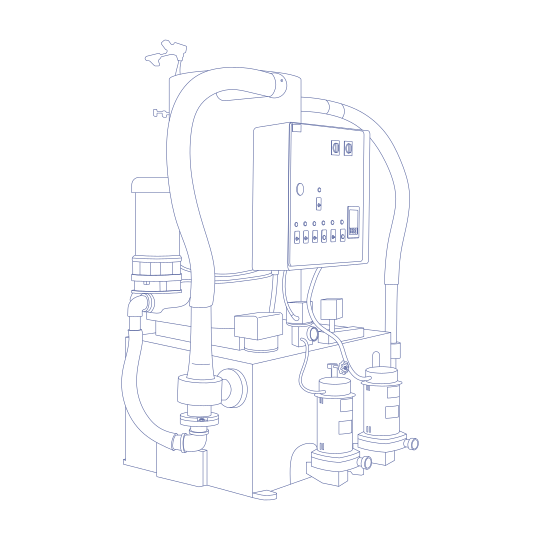
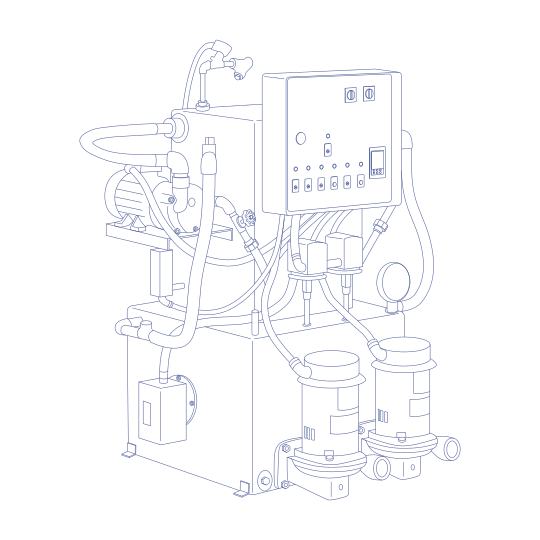
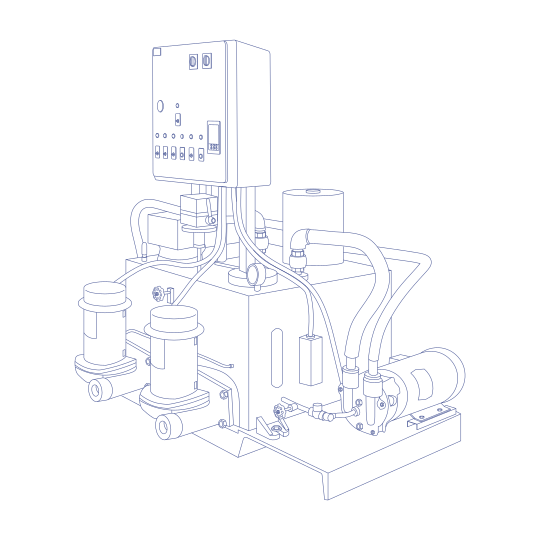
Skidmore condensate return units are packaged systems. Each includes a receiver tank, pump assembly, float-controlled or level-switch activation, and motor, all assembled, wired, and tested as a complete unit before shipment. When it arrives, it’s ready to install.
How Does a Condensate Return System Work?
A condensate return system collects, holds, and pumps condensate back into the boiler feed circuit automatically.
Here’s the sequence. Steam travels through the distribution system and gives up its heat energy to radiators, heat exchangers, or process equipment. As it cools, it condenses into hot water and drains by gravity through steam traps into a condensate receiver tank. The receiver acts as a collection point and buffer between the steam system and the pump.
When the water level inside the receiver reaches a set point, a float device or high-level float switch activates the pump. The pump then moves the condensate from the receiver back to the boiler feed unit at the required pressure. Once the water level drops, the pump stops and waits for the next cycle.
An important distinction: condensate return pumps respond to the water level inside the receiver, not to boiler demand. The boiler feed unit handles the boiler-side water level management. The two systems work together, but they operate on separate control logic.
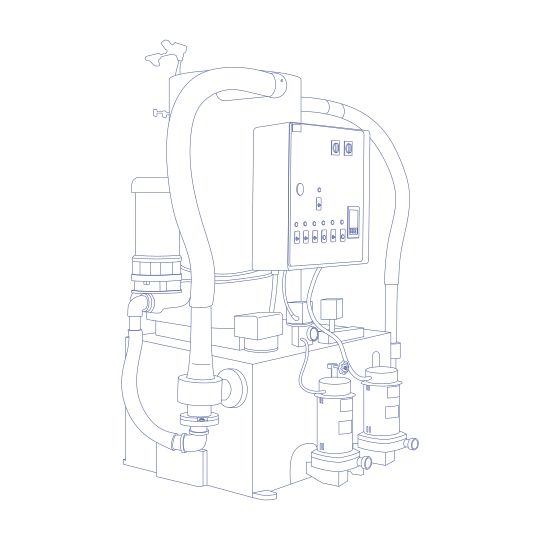
Skidmore’s 10MX Series Condensate Return units illustrate this well. The 10MX condensate pump is controlled by the receiver’s water level via a float switch and is not equipped with a makeup valve mechanism, unlike the 10MX Boiler Feed unit, which takes its signal from a boiler-mounted level controller. Understanding this distinction matters when you’re specifying a two-stage system.
Benefits of Condensate Recovery Systems
Recovering condensate rather than discarding it has measurable benefits for any steam-based facility.
Energy savings. Condensate leaves the steam system at temperatures between 180°F and 212°F, depending on system pressure. Returning that hot water to the boiler reduces the energy required to heat incoming feedwater. Less energy input means lower fuel costs over the operating season.
Reduced makeup water consumption. Every gallon of condensate recovered is a gallon of fresh makeup water that doesn’t need to be treated, heated, and chemically conditioned. For facilities with large steam systems, this reduction in makeup water volume adds up quickly in both water costs and chemical treatment expenses.
Lower thermal stress on the boiler. Cold makeup water entering a hot boiler causes rapid temperature differentials inside the vessel. Returning pre-heated condensate narrows that gap, reducing thermal cycling stress and contributing to longer boiler service life.
Reduced water treatment demand. Fresh makeup water requires chemical treatment to control scale, corrosion, and pH. Condensate has already been through the process and is relatively pure. The more condensate you return, the less chemical treatment your system requires.
System reliability. A properly functioning condensate tank and pump system keeps the boiler feed unit consistently supplied. Gaps in condensate return force the boiler feed unit to draw heavily on cold makeup water, increasing the risk of low-water conditions, short cycling, and unnecessary wear.
Applications of Condensate Return Pumps
Condensate return pumps are specified wherever steam heating systems operate. The application drives the series selection.
Commercial and institutional buildings: Hospitals, universities, government buildings, and large office complexes operate steam systems year-round. The Protector Series and 10MX Series cover the typical EDR range for these installations, with low-profile options available for mechanical rooms where headroom is restricted.
Industrial and process facilities: Manufacturing plants, food processing operations, chemical facilities, and pharmaceutical production environments often require higher capacities and custom configurations. The V Series handles capacities from 1,000 to 100,000 sq. ft. EDR, with discharge pressures up to 75 PSI and Building Management System integration available on request.
Retrofits and system upgrades: When an aging condensate return system needs replacement, the Protector Series offers a practical advantage. Its universal 4-bolt square flange mounting accepts an adapter that allows it to fit most major competitor footprints, reducing retrofit complexity and installation time.
Constrained mechanical rooms: Low clearance, tight footprints, and unusual access points are common in older buildings. Several Skidmore series, including the Protector, offer low-profile configurations specifically designed for these situations.
Condensate Pump vs. Boiler Feed Pump
These two pump types are closely related but serve different functions in a steam system. Understanding the difference is important for correct specification.
| Condensate Return Pump | Boiler Feed Pump | |
| Primary function | Collects and returns condensate from the system to the boiler feed unit | Pumps condensate and makeup water directly into the boiler |
| Control signal | Responds to the water level inside the condensate receiver | Responds to the boiler-mounted water level controller |
| Makeup water valve | Not typically equipped with a makeup valve | Equipped with a float-operated or electric solenoid makeup valve |
| Position in the system | Upstream of the boiler feed unit | Directly supplies the boiler |
| Typical pressure range | Lower pressure (matches system return requirements) | Must match boiler operating pressure |
Condensate Return Pump Series from Skidmore
10MX Series Condensate Return
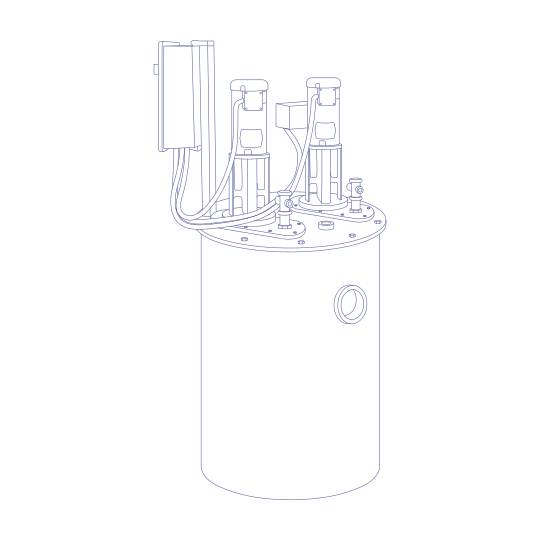
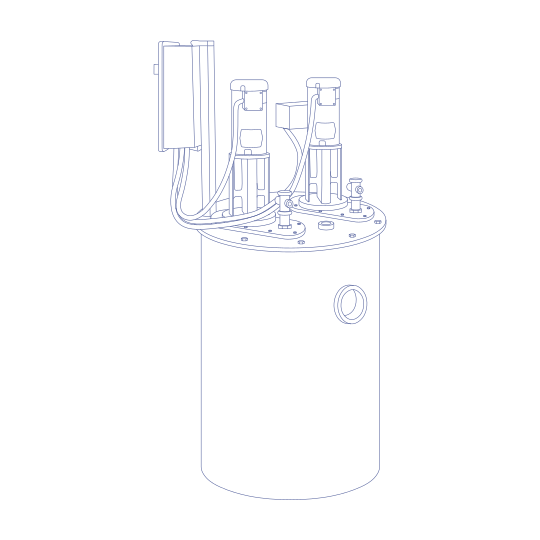
A compact, packaged unit for low-pressure steam heating systems. Available in simplex or duplex, with cast iron or steel receivers. Capacity to 12,000 sq. ft. EDR (18 GPM), discharge pressures of 20, 30, and 40 PSI. The pump is controlled by the receiver water level via a high-level float switch.
Protector Series Condensate Return
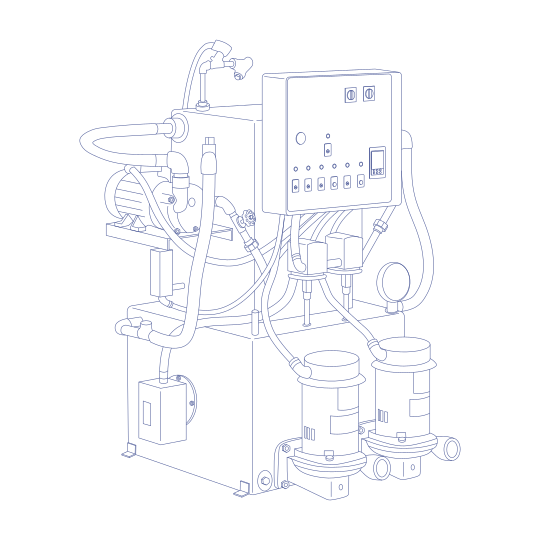
Our most reliable in-stock unit. Available in simplex or duplex, cast iron or steel receivers, from 6 to 110 gallons. Capacities from 8,000 to 12,000 sq. ft. EDR. Low-profile options available, NORYL impeller, mechanical seal rated to 250°F. Simplex units are pre-wired for future addition of a second pump.
V Series Condensate Return
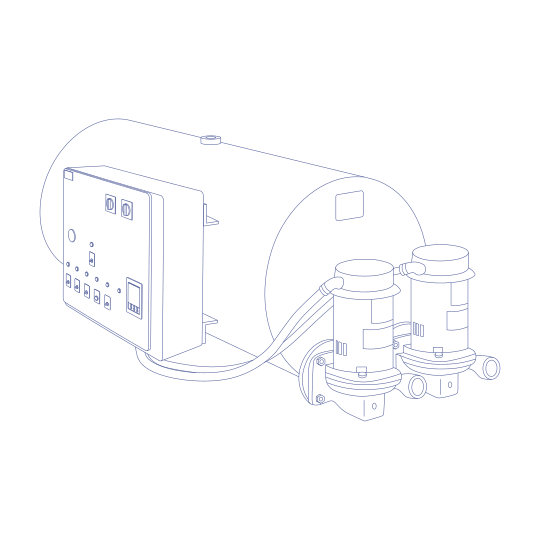
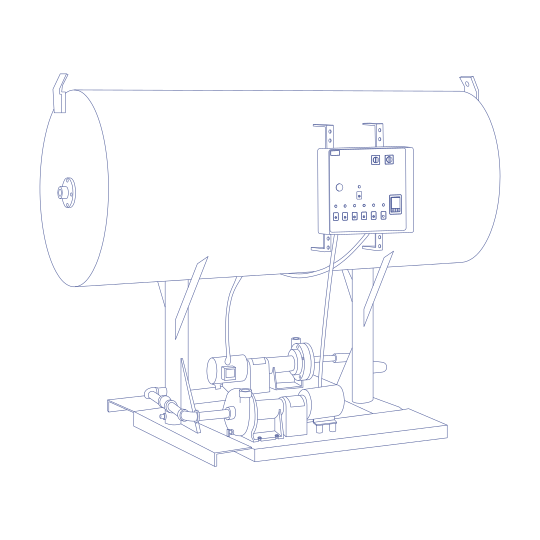
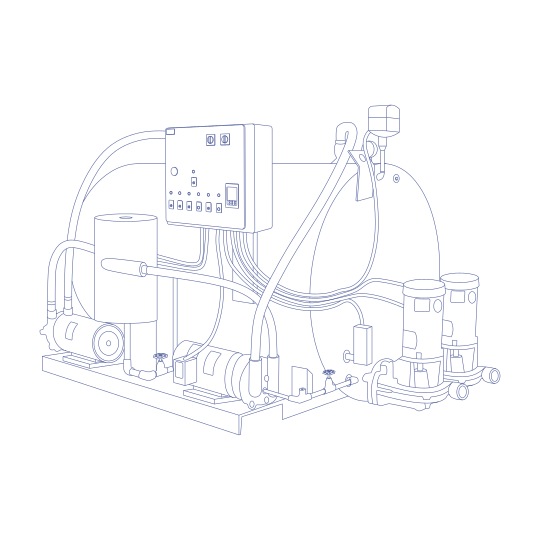
Custom-built for applications beyond standard footprints. Simplex through quadruplex configurations, 1,000 to 100,000 sq. ft. EDR. Discharge pressures from 10 to 30 PSI on 1,750 RPM units and 20 to 75 PSI on 3,500 RPM units. True 2-ft. NPSHR pumps available on select models, BMS integration available, Viton seals for 300°F applications.
FAQ
What is a condensate return system?
A condensate return system collects the hot water produced when steam condenses after transferring its heat energy, and pumps it back to the boiler feed unit for reuse. It consists of a receiver tank, a steam condensate pump, and associated controls. Returning condensate instead of discarding it recovers heat energy, reduces makeup water consumption, and lowers the operating cost of a steam heating system.
What does a condensate tank do?
A condensate tank (also called a receiver) acts as a collection and buffer point between the steam distribution system and the return pump. Condensate drains from the steam traps into the tank by gravity. The tank holds this water until the pump activates, then supplies the pump with a steady, controlled flow. Without a properly sized condensate tank, the pump would short-cycle, leading to premature wear and inconsistent system performance.
Why is condensate recovery important?
Condensate recovery matters for three practical reasons: energy, water, and equipment longevity. Returned condensate is already hot, so less fuel is needed to bring it back to steam temperature. It requires less chemical treatment than fresh makeup water, reducing treatment costs. And it lowers the volume of cold water entering the boiler, which reduces thermal stress on the vessel. Facilities with larger steam systems see the most measurable impact, but the benefit applies at any scale.
How do I choose between the 10MX, Protector, and V Series for condensate return?
Start with your system’s EDR load. For loads up to 12,000 sq. ft. EDR, both the 10MX and Protector Series are suitable; the Protector is the faster in-stock option, while the 10MX offers specific discharge pressure configurations (20, 30, and 40 PSI) that may better match your system. For loads above 12,000 sq. ft. EDR, or where custom sizing, higher pressure, or BMS integration is required, the V Series is the right choice.
Can Skidmore supply a custom condensate return unit?
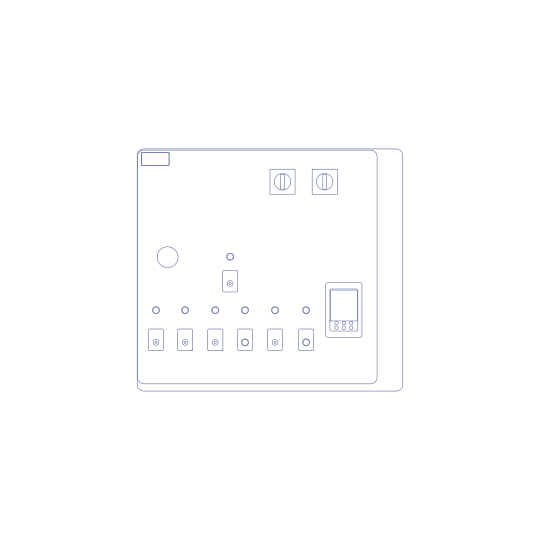
Yes. The V Series is custom-built to order across a wide range of capacities, receiver materials, pressure requirements, and configurations. If your installation has non-standard requirements, unusual footprint, high-temperature application, or specific control panel requirements, contact a Skidmore rep, and our application specialists will work through the specification with you.
Request Product Information
Contact a Skidmore representative or submit a quote request. Our team supports selection, sizing, and custom configurations from initial specification through installation.
Find a Rep | Request Info | Submit a Quote Request
Condensate Return Pumps
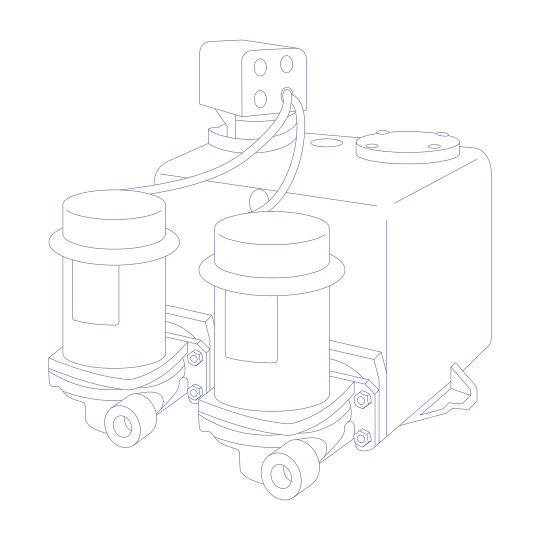
10MX Series Condensate Return
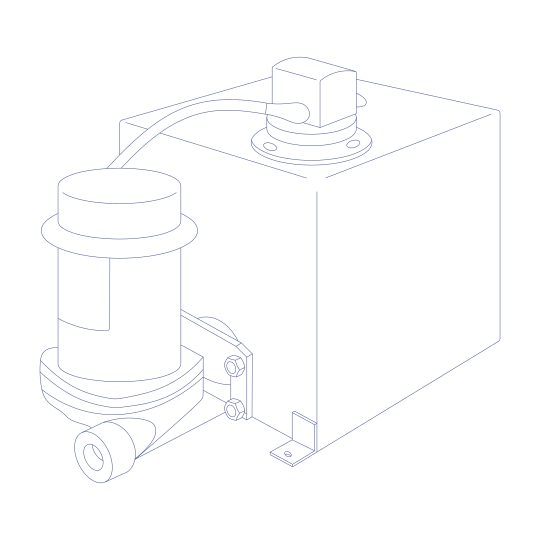
Protector Series Condensate Return
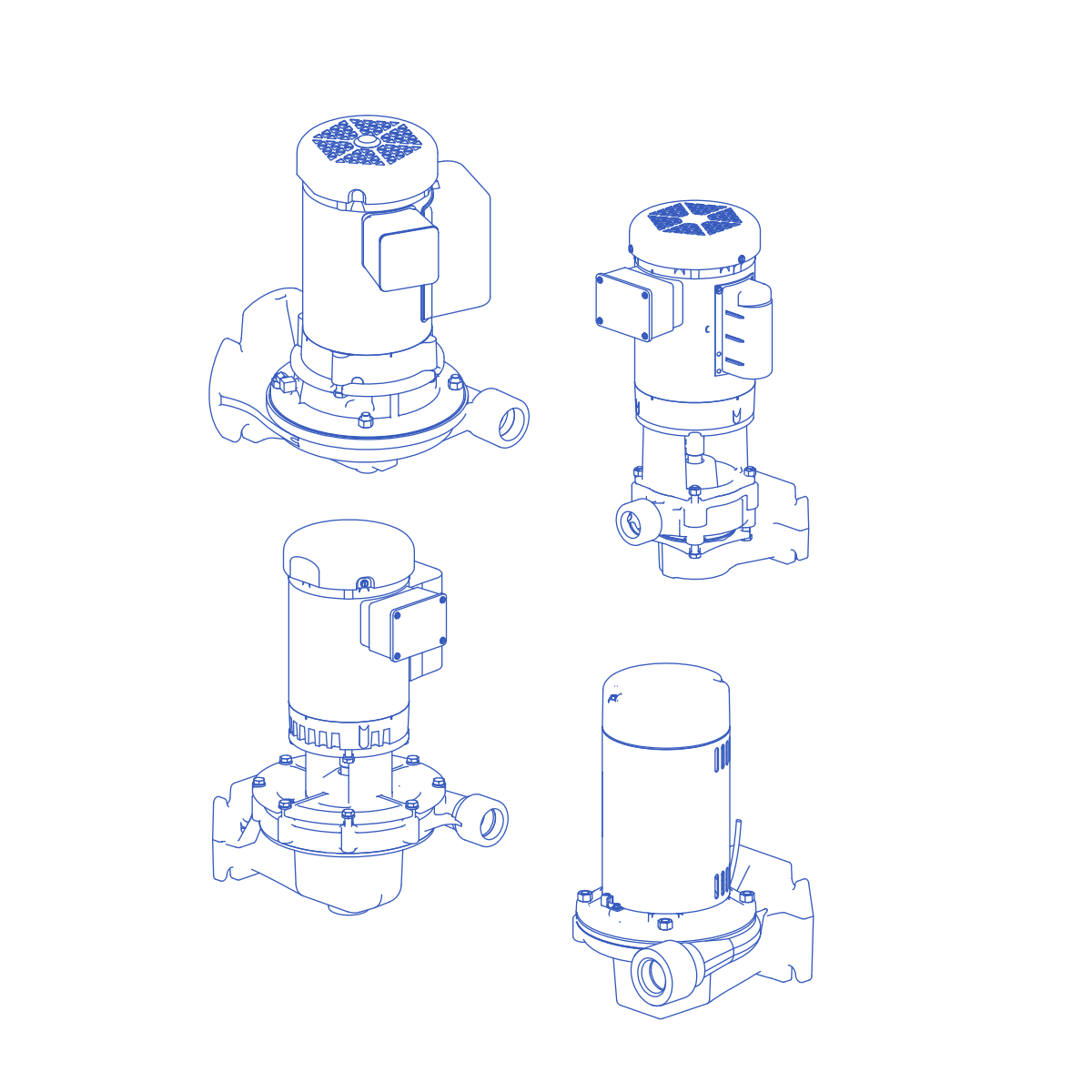
V Series Cast Iron Centrifugal Pumps
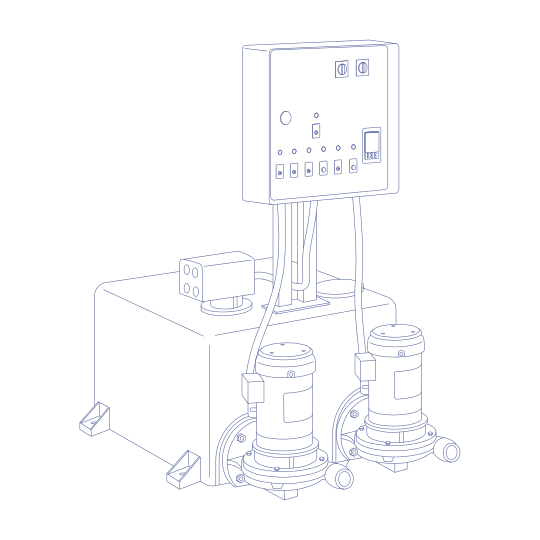
V Series Condensate Return
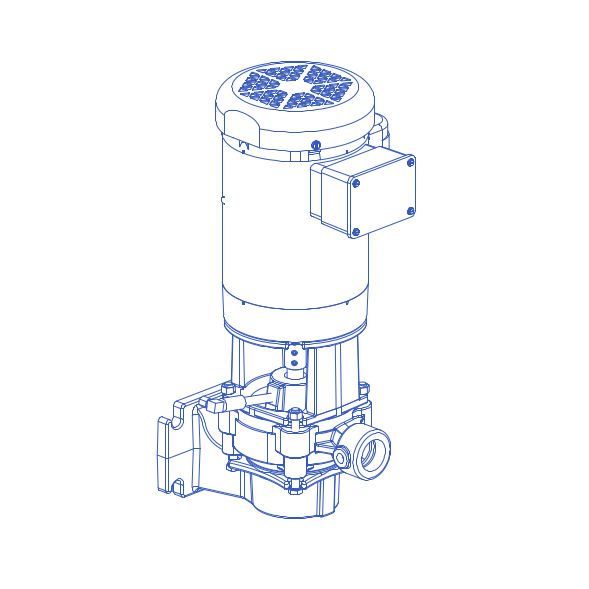
VP Stainless Steel Centrifugal Pump